WARNING: This product contains nicotine.
Nicotine is an addictive chemical.
WARNING: This product contains nicotine.
Nicotine is an addictive chemical.
WARNING: This product contains nicotine.
Nicotine is an addictive chemical.
Which Nicotine Strengths Should Vape Shops Stock?
Which Nicotine Strengths Should Vape Shops Stock?
Descubrimientos
Descubrimientos
por
por
Kareena
Kareena
Plan which nicotine strengths to stock in your vape shop. Use customer demand, sales data and budgets to select flavour combinations and manage reorders.
Plan which nicotine strengths to stock in your vape shop. Use customer demand, sales data and budgets to select flavour combinations and manage reorders.

Which Nicotine Strengths Should Vape Shops Stock?
Planning e-liquid nicotine strengths involves balancing market requirements, customer demand, stock turnover and purchasing costs. Each additional strength creates another stock line for a flavour, while a narrow selection can leave customer requests unfilled. A practical purchasing plan keeps established combinations available and reserves room to test new options.
For vape shops, retailers and wholesale buyers, strength planning comes down to three decisions: which strengths to carry for each flavour, how much to order, and how to adjust the next purchase.
Confirm Which Nicotine Strengths Are Available
Start with the nicotine limits and product requirements in your target market. Then review the supplier’s available options alongside the selected e-liquid formulation, PG/VG ratio and device compatibility information.
Each purchasing record should identify:
Brand and flavour + nicotine type + nicotine strength + PG/VG ratio + bottle size + market version.
Record nicotine strength consistently in mg/ml and label the PG/VG ratio clearly. These details help buyers distinguish product specifications and compare sales within comparable product groups.
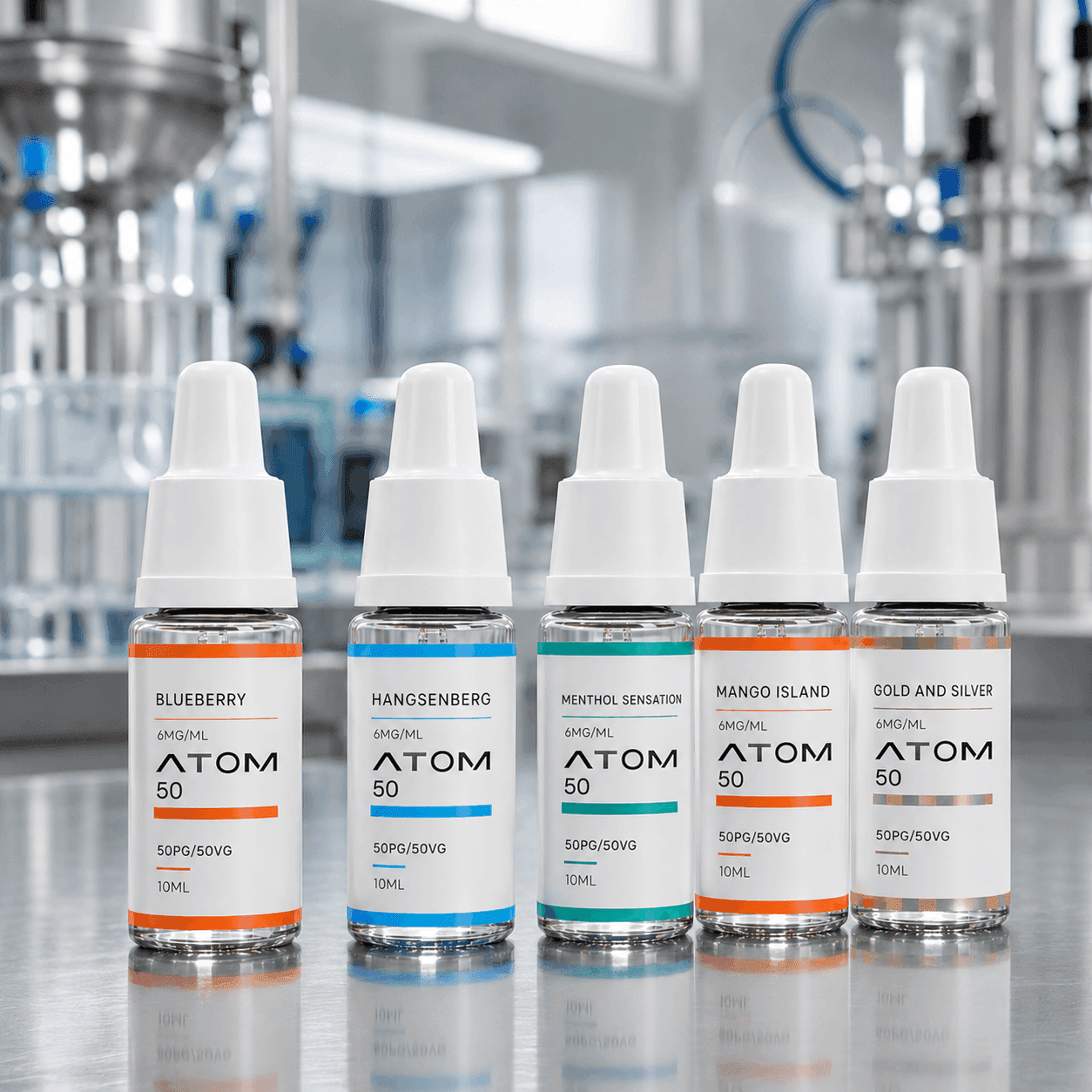
For example, the ATOM product range includes 10ml freebase e-liquids, 50:50 and 70:30 HPG options, and strengths listed across the range from 0 to 18mg/ml. Confirm availability for each selected flavour and destination market before finalising quantities.
For more detail on formulation choices, see our PG/VG ratio guide.
Use Demand Records to Choose Strengths for Each Flavour
Review nicotine strength demand by individual flavour. When a tobacco flavour sells consistently, examine the sales, repeat purchases and stockouts of each strength to decide which combinations deserve stock.
Track four types of information:
Units sold: Sales for each flavour–strength combination.
Time available: The number of days each specification was in stock and available for sale.
Repeat demand: Returning customers or repeat orders from downstream retailers.
Unfulfilled requests: Strengths customers ask for that are unavailable or outside your current selection.
To compare sales rates, calculate:
Average daily sales = Units sold during the review period ÷ Days available for sale.
For example, two strengths of the same flavour may each sell 20 bottles. If one was available for 10 days and the other for 20 days, their average daily sales would be two bottles and one bottle respectively. Review these figures alongside promotions, prices and shelf placement when planning stock.
Use the evidence to make a specific purchasing decision:
Demand Pattern | Strength Planning Action |
|---|---|
Several strengths of one flavour sell consistently | Retain those strengths and calculate quantities separately |
An existing strength attracts repeat purchases, with repeated requests for another option | Maintain the established specification and test the additional strength |
Demand for a new flavour centres on one strength | Start with that specification and use feedback to guide expansion |
One strength regularly sells out | Review its order quantity and replenishment timing |
Stock of one strength continues to accumulate | Review selling conditions and reduce future purchasing |
New shops can build their initial selection from specific customer requests, comparable product sales and feedback from trade customers. A request such as “this menthol flavour in 6mg/ml” gives buyers a clear specification to investigate.
Distributors and wholesalers can also separate records by region or customer group, allowing strength selections to reflect the needs of different sales channels.
Allocate Order Quantities Within Your Budget
Calculate the inventory commitment associated with each additional strength.
Four flavours stocked in three strengths create 12 SKUs. Adding one more strength to each flavour introduces four additional stock lines.
Additional purchase value = The sum of the order quantity × unit purchase cost for each new SKU.
Include applicable taxes, freight and other landed costs to establish the budget required for those additions.
Order Established Strengths According to Sales
For combinations with reliable sales records:
Estimate demand until the next replenishment arrives.
Deduct available stock and confirmed incoming quantities.
Add a stock buffer based on demand variability and delivery experience.
Adjust the order to the supplier’s pack quantities and minimum order requirements.
Calculate each strength separately so purchasing funds follow demand.
Set Trial Quantities for New Strengths
For a strength being ordered for the first time, use customer demand records, pack quantities and the trial budget to determine the initial purchase. Set a review date when placing the order.
Keep funds available for follow-up purchases so stronger-selling specifications can be replenished. Testing a small group of new combinations at a time also makes the results easier to review.
Adjust the Next Order Using Sales Performance
Review sales rate, repeat demand and remaining stock for each flavour, strength and PG/VG combination.
For established products, calculate:
Days of stock cover = Available stock ÷ Average daily sales.
Compare stock cover with supplier lead time and purchasing frequency to decide when to reorder. Record stockouts, promotions, price changes and display changes alongside the figures to help explain performance during the review period.
Each review should produce a clear action:
Increase quantities for specifications with consistent demand and insufficient stock.
Maintain the purchasing schedule where sales and inventory are balanced.
Test an additional strength where customer requests persist.
Reduce the next order, or pause replenishment, where stock is accumulating.
Review trial products on their scheduled dates and established products within the regular purchasing cycle. These adjustments gradually build a nicotine strength selection suited to the shop’s customer base.
Prepare Your Wholesale Enquiry
Once the combinations are selected, organise your target market, sales channel, product specifications, estimated quantities and required delivery timing into an enquiry list.
Ask the supplier to confirm available strengths for each flavour, pack quantities, MOQ, lead times and relevant market documentation. State quantities clearly in bottles, packs or cases so quotations and orders can be checked accurately.
Buyers sourcing 10ml freebase e-liquids can use the ATOM product catalogue to shortlist flavours, PG/VG ratios and nicotine strengths.
Contact ATOM with your required specifications and estimated quantities to confirm product availability and wholesale ordering details.
Compartir artículo
Compartir artículo
CONTINUE READING
CONTINUE READING




Copyright © 2026 ATOM. All rights reserved.
Copyright © 2026 ATOM. All rights reserved.