WARNING: This product contains nicotine.
Nicotine is an addictive chemical.
WARNING: This product contains nicotine.
Nicotine is an addictive chemical.
WARNING: This product contains nicotine.
Nicotine is an addictive chemical.
Russia Vape Market Overview 2026
Russia Vape Market Overview 2026
Discoveries
Discoveries
by
by
Kareena
Kareena
Explore Russia’s vaping market in 2026, including regulation, product structure, flavor trends, and supply chain dynamics shaping industry development.
Explore Russia’s vaping market in 2026, including regulation, product structure, flavor trends, and supply chain dynamics shaping industry development.

Market Overview
The Russian vaping market continues to evolve in 2026, shaped by tightening enforcement, regulatory adjustments, and shifting consumer preferences.
With an estimated market size of around USD 2 billion and approximately 5.6 million users, Russia remains one of the key vaping markets globally. Despite increasing regulatory pressure, demand for alternative nicotine products among adult smokers remains resilient, supported by a large base of 35–40 million smokers.
Regulatory Trends Reshaping the Market
In recent years, regulatory enforcement in the Russian vaping market has become increasingly strict, accompanied by growing policy uncertainty.
The implementation of systems such as Chestny ZNAK has significantly strengthened product traceability and compliance requirements. At the same time, enforcement across retail channels has become more consistent, gradually reducing space for non-compliant circulation.
Excise taxes on e-liquids continue to rise, reaching RUB 44/ml in 2025 and increasing further in the coming years.
Online sales remain prohibited nationwide, making offline retail the only compliant channel for distribution. Meanwhile, marketing restrictions on digital platforms have also tightened, limiting brand exposure and promotional activities.
A more impactful signal at the policy level is that a proposal for a comprehensive ban on vaping product sales has received support from a national committee, although it has not yet been formally legislated.
While the long-term direction of regulation is still evolving, the market continues to operate with active demand. For industry participants, this creates a window where compliance, product adaptability, and channel execution become increasingly important.
Product Structure and Market Dynamics
In 2026, disposable vapes account for approximately 60% of the Russian market, remaining the dominant product category. However, rising taxation and regulatory pressure are gradually impacting cost structures in this segment.
Open systems and bottled e-liquids maintain a stable share of around 30%, supported by a loyal user base.
Within the open-system category, usage patterns are evolving. Open pods are becoming increasingly popular due to their ease of use, lower entry barrier, and more flexible everyday usage compared to traditional MOD systems.
The bottled e-liquid market in Russia shows a highly diversified structure.
Nicotine formats include freebase, nicotine salts, and Nikobooster DIY solutions. Although regulations set a maximum limit of 20 mg/ml, higher-strength products are still widely present in grey-market circulation.
Large-bottle e-liquids primarily serve users of traditional open-system devices. In retail, 100 ml bottles are the most common format, typically offered in freebase 3 mg or 6 mg.
At the same time, small-bottle e-liquids designed for open pod users are also widely available in retail.
Flavor Trends in Russia
Flavor preferences in Russia are strongly influenced by disposable vape trends.
Iced fruits, berry profiles, mint, and energy drink-inspired flavors remain the dominant categories in the market. Cooling sensations continue to play a key role in overall flavor experience, especially among high-frequency users.
At the same time, there is a noticeable shift toward more complex and layered flavor blends. Combinations such as mixed berries, fruit with cooling elements, and fruit-beverage hybrids are becoming increasingly common.
This evolution reflects changing consumer expectations, where users are not only seeking strong flavor impact but also more nuanced and varied taste experiences over time.
Brand Landscape
The Russian vaping market features a diverse brand landscape across both devices and e-liquids.
In the disposable segment, international brands such as Lost Mary, WAKA, and Puffmi have gained strong market visibility in recent years, gradually replacing earlier dominant brands like HQD.
At the same time, a number of brands enter the market through international wholesale channels, maintaining presence across different price segments.
Local brands also play an important role, particularly in the e-liquid category, where they rely on established distribution networks and retail relationships to maintain stable market presence.
Supply Chain Dynamics
Russia remains highly dependent on international supply chains, particularly from China, for vaping devices, e-liquids, and key components.
At the same time, market competition is influenced by grey-market circulation and inventory flows across regions. Pricing dynamics and channel competition can shift quickly, requiring distributors to balance margin, turnover, and product stability.
As a result, supply chain reliability, consistent quality, and portfolio completeness are becoming increasingly important factors in partner selection.
How Atom Supports the Russian Market
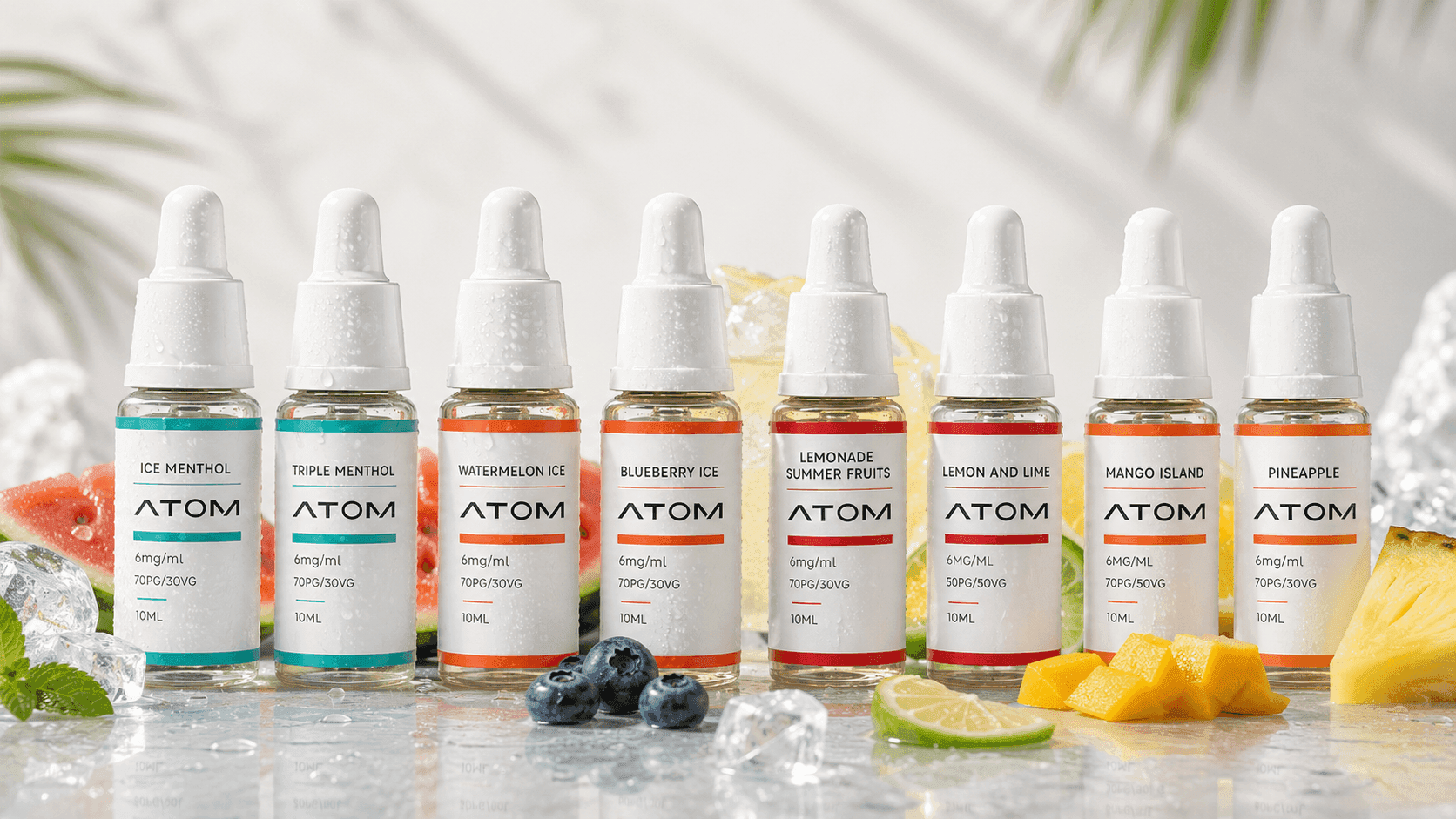
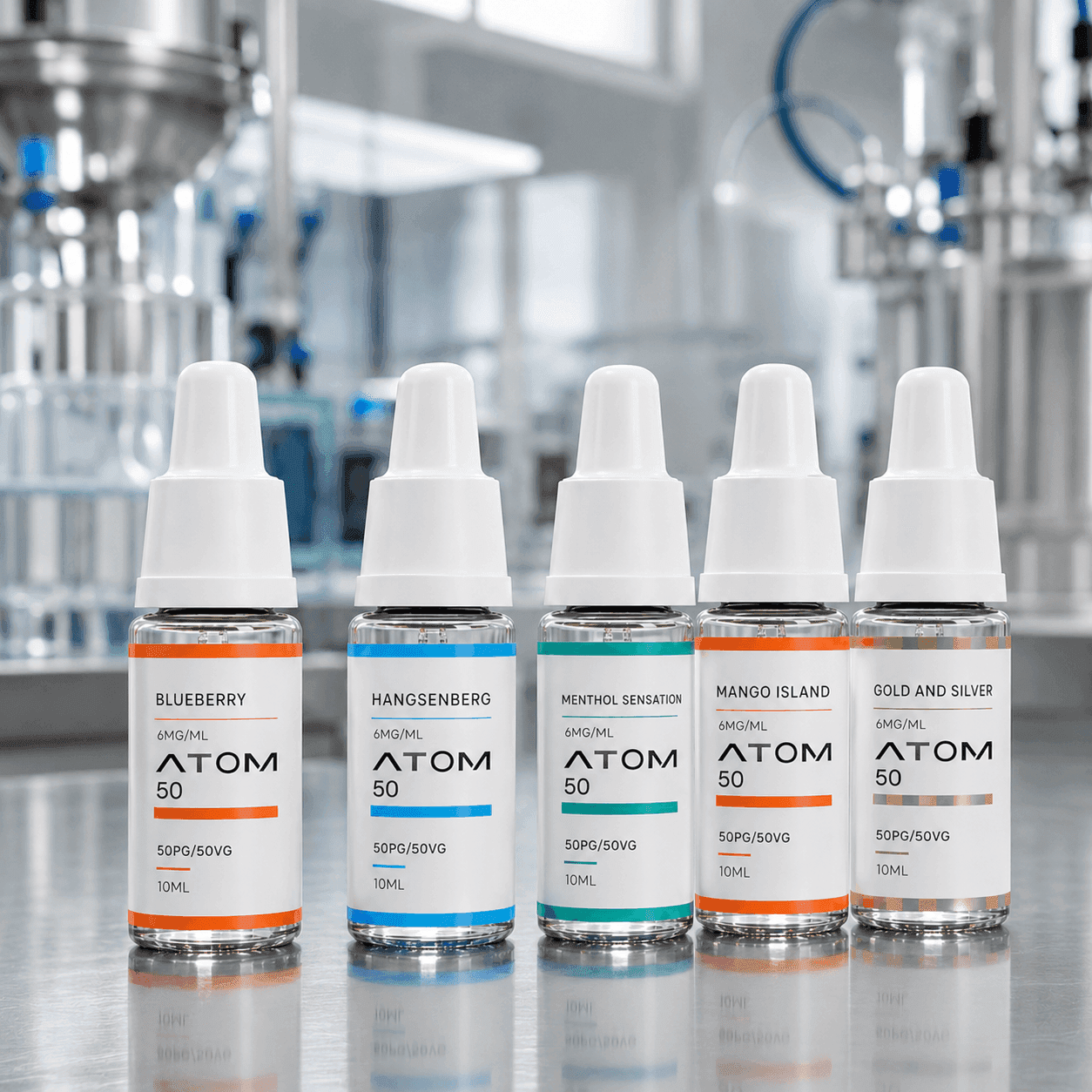
Atom focuses on delivering high-quality freebase e-liquids for international markets, supported by a mature manufacturing system and extensive flavor development experience.
Our product range covers a wide variety of flavor categories, including fruit, beverage, dessert, menthol, and tobacco, aligning with mainstream preferences in the Russian market.
With stable supply capabilities and consistent product quality, Atom supports distributors and partners in building reliable and competitive product portfolios.
📩 Get in Touch
Looking for a reliable e-liquid partner for the Russian market?
Contact Atom here to explore product solutions that fit your business needs.
Market Overview
The Russian vaping market continues to evolve in 2026, shaped by tightening enforcement, regulatory adjustments, and shifting consumer preferences.
With an estimated market size of around USD 2 billion and approximately 5.6 million users, Russia remains one of the key vaping markets globally. Despite increasing regulatory pressure, demand for alternative nicotine products among adult smokers remains resilient, supported by a large base of 35–40 million smokers.
Regulatory Trends Reshaping the Market
In recent years, regulatory enforcement in the Russian vaping market has become increasingly strict, accompanied by growing policy uncertainty.
The implementation of systems such as Chestny ZNAK has significantly strengthened product traceability and compliance requirements. At the same time, enforcement across retail channels has become more consistent, gradually reducing space for non-compliant circulation.
Excise taxes on e-liquids continue to rise, reaching RUB 44/ml in 2025 and increasing further in the coming years.
Online sales remain prohibited nationwide, making offline retail the only compliant channel for distribution. Meanwhile, marketing restrictions on digital platforms have also tightened, limiting brand exposure and promotional activities.
A more impactful signal at the policy level is that a proposal for a comprehensive ban on vaping product sales has received support from a national committee, although it has not yet been formally legislated.
While the long-term direction of regulation is still evolving, the market continues to operate with active demand. For industry participants, this creates a window where compliance, product adaptability, and channel execution become increasingly important.
Product Structure and Market Dynamics
In 2026, disposable vapes account for approximately 60% of the Russian market, remaining the dominant product category. However, rising taxation and regulatory pressure are gradually impacting cost structures in this segment.
Open systems and bottled e-liquids maintain a stable share of around 30%, supported by a loyal user base.
Within the open-system category, usage patterns are evolving. Open pods are becoming increasingly popular due to their ease of use, lower entry barrier, and more flexible everyday usage compared to traditional MOD systems.
The bottled e-liquid market in Russia shows a highly diversified structure.
Nicotine formats include freebase, nicotine salts, and Nikobooster DIY solutions. Although regulations set a maximum limit of 20 mg/ml, higher-strength products are still widely present in grey-market circulation.
Large-bottle e-liquids primarily serve users of traditional open-system devices. In retail, 100 ml bottles are the most common format, typically offered in freebase 3 mg or 6 mg.
At the same time, small-bottle e-liquids designed for open pod users are also widely available in retail.
Flavor Trends in Russia
Flavor preferences in Russia are strongly influenced by disposable vape trends.
Iced fruits, berry profiles, mint, and energy drink-inspired flavors remain the dominant categories in the market. Cooling sensations continue to play a key role in overall flavor experience, especially among high-frequency users.
At the same time, there is a noticeable shift toward more complex and layered flavor blends. Combinations such as mixed berries, fruit with cooling elements, and fruit-beverage hybrids are becoming increasingly common.
This evolution reflects changing consumer expectations, where users are not only seeking strong flavor impact but also more nuanced and varied taste experiences over time.
Brand Landscape
The Russian vaping market features a diverse brand landscape across both devices and e-liquids.
In the disposable segment, international brands such as Lost Mary, WAKA, and Puffmi have gained strong market visibility in recent years, gradually replacing earlier dominant brands like HQD.
At the same time, a number of brands enter the market through international wholesale channels, maintaining presence across different price segments.
Local brands also play an important role, particularly in the e-liquid category, where they rely on established distribution networks and retail relationships to maintain stable market presence.
Supply Chain Dynamics
Russia remains highly dependent on international supply chains, particularly from China, for vaping devices, e-liquids, and key components.
At the same time, market competition is influenced by grey-market circulation and inventory flows across regions. Pricing dynamics and channel competition can shift quickly, requiring distributors to balance margin, turnover, and product stability.
As a result, supply chain reliability, consistent quality, and portfolio completeness are becoming increasingly important factors in partner selection.
How Atom Supports the Russian Market
Atom focuses on delivering high-quality freebase e-liquids for international markets, supported by a mature manufacturing system and extensive flavor development experience.
Our product range covers a wide variety of flavor categories, including fruit, beverage, dessert, menthol, and tobacco, aligning with mainstream preferences in the Russian market.
With stable supply capabilities and consistent product quality, Atom supports distributors and partners in building reliable and competitive product portfolios.
📩 Get in Touch
Looking for a reliable e-liquid partner for the Russian market?
Contact Atom here to explore product solutions that fit your business needs.
Share article
Share article
CONTINUE READING
CONTINUE READING






Copyright © 2026 ATOM. All rights reserved.
Copyright © 2026 ATOM. All rights reserved.