WARNING: This product contains nicotine.
Nicotine is an addictive chemical.
WARNING: This product contains nicotine.
Nicotine is an addictive chemical.
WARNING: This product contains nicotine.
Nicotine is an addictive chemical.
Canada Vaping Market Overview 2026: Trends, Growth & Business Potential
Canada Vaping Market Overview 2026: Trends, Growth & Business Potential
Descubrimientos
Descubrimientos
por
por
Kareena
Kareena
An overview of the Canadian vaping market, covering regulatory developments, consumer trends, device categories, and market opportunities for compliant brands entering Canada.
An overview of the Canadian vaping market, covering regulatory developments, consumer trends, device categories, and market opportunities for compliant brands entering Canada.

The Canadian vaping market remains one of the most promising segments in North America, offering a more predictable regulatory environment and broader opportunities for new entrants compared with the U.S. Although its total sales and user base are smaller than in the U.S., Canada’s vaping industry has demonstrated steady growth and consumer adoption.
Market Size and User Base
Canada is home to over 2 million adult vapers, representing a solid consumer foundation for the industry. Recent estimates placed the market value at roughly USD 1.4 billion in 2026 as demand continues to rise.
Part of this growth reflects a broader global trend where traditional tobacco users switch to vaping products, often perceived as a less harmful alternative. Canadian vaping penetration continues to expand, particularly among adults seeking alternatives to combustible tobacco.
Regulatory Framework
Regulation is the single most significant factor shaping the Canadian vaping industry.
Federal Regulations (Health Canada)
The core framework is established by the Tobacco and Vaping Products Act (TVPA). Key pillars include: a ban on advertising appealing to youth; mandatory nicotine concentration limits (e.g., 20 mg/mL for prefilled pods); child-resistant packaging; and strict ingredient disclosure. Additionally, a federal excise duty applies to vaping products, adding a cost layer for manufacturers and consumers.
Flavour Bans
Unlike certain countries, Canada does not yet enforce a nationwide ban on flavored vape products, although several provinces have adopted their own flavor restrictions. Quebec, Nova Scotia, New Brunswick, and Prince Edward Island have moved to limit flavor availability or restrict non-tobacco flavor sales altogether.
Taxation
Canada introduced a federal vaping duty effective July 1, 2024, applying an excise tax based on e-liquid volume, with a tiered structure that charges a fixed amount for the first 10 mL and an additional rate for every extra 10 mL or fraction thereof, making smaller-capacity products proportionally more affected.
E-liquid Volume | Federal Duty | Provinces Duty |
First 10 mL | CAD 1.12 / 2 mL | CAD 2.24 / 2 mL |
Above 10 mL | CAD 1.12 / 10 mL | CAD 2.24 / 10 mL |
In provinces participating in the coordinated vaping duty system, an equivalent provincial tax is added on top of the federal duty, effectively doubling the tax burden in those regions(Ontario, Quebec, Northwest Territories, Nunavut, etc.). The duty is calculated per individual container or device based on actual e-liquid volume, including multi-pack products.
Product Type | Federal Duty | Total Duty |
2 mL Devices | CAD ~1.12 | CAD ~2.24 |
30 mL E-Liquid | CAD ~7.84 | CAD ~15.68 |
60 mL E-Liquid | CAD ~11.20 | CAD ~22.40 |
Excise Stamp
All compliant products must carry an official excise stamp before entering the market. Manufacturers, importers, and distributors are required to meet strict registration, stamping, reporting, and record-keeping obligations, with significant penalties for non-compliance.
Device Types and Consumer Preferences
The Canadian vaping ecosystem is balanced between various device formats:
Disposable vapes: Rapidly expanding segment due to affordability and convenience, now representing a large share of new users.
Closed pod systems: Stable segment with consistent popularity, especially among adult consumers looking for easy-to-use products.
Open systems: Once ubiquitous, these have declined in dominance as pod and disposable formats take over much of the market share.
Competitive Landscape and Key Channels
Major Players
Unlike other global markets, Canada remains a stronghold for homegrown brands. Local players like STLTH, Flavour Beast, Vice, and Lemon Drop have secured dominant shelf space
Distribution Channels
Specialist Vape Shops: Crucial for device sales, expert advice, and building consumer loyalty. They are vital advocates within the regulated adult consumer market.
Convenience Stores/Gas Stations: Dominate the sales of closed-pod systems and disposable products, focusing on accessibility and impulse purchases.
The Online Channel: E-commerce remains a significant channel, though it operates under strict age verification (mandatory 18+) and regulatory requirements to prevent youth access.
Market Outlook & Opportunities
Overall, Canada continues to offer strong long-term opportunities for the vaping industry. Compared with many global markets, Canada maintains a relatively transparent and structured regulatory framework, allowing compliant brands to plan, innovate, and scale with greater confidence.
Atom’s Competitive Advantage in Entering the Canadian Market
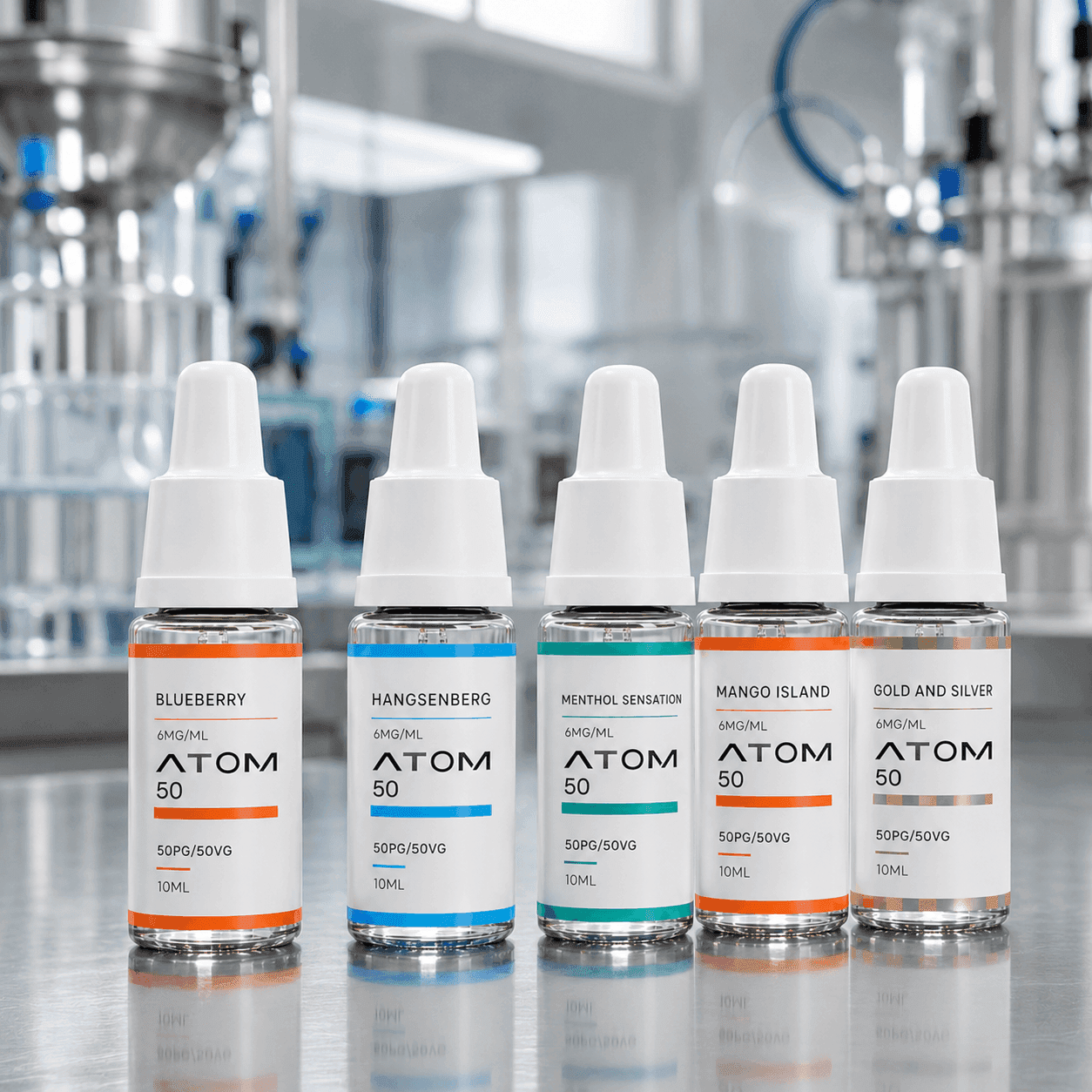
Atom is well positioned to enter the Canadian vaping market through a compliance-driven and market-adaptive strategy. With strong experience in regulated markets, Atom focuses on regulation-ready product design, consistent manufacturing standards, and reliable supply capabilities that meet Canadian distributor and retailer expectations. By offering streamlined product selections, stable quality, and dependable delivery, Atom provides partners with a low-risk, scalable solution for building long-term presence in Canada’s evolving vape landscape.
Learn more about Atom:
👉 https://atomeliquid.com/aboutus
For product information or business inquiries, please contact us here.
The Canadian vaping market remains one of the most promising segments in North America, offering a more predictable regulatory environment and broader opportunities for new entrants compared with the U.S. Although its total sales and user base are smaller than in the U.S., Canada’s vaping industry has demonstrated steady growth and consumer adoption.
Market Size and User Base
Canada is home to over 2 million adult vapers, representing a solid consumer foundation for the industry. Recent estimates placed the market value at roughly USD 1.4 billion in 2026 as demand continues to rise.
Part of this growth reflects a broader global trend where traditional tobacco users switch to vaping products, often perceived as a less harmful alternative. Canadian vaping penetration continues to expand, particularly among adults seeking alternatives to combustible tobacco.
Regulatory Framework
Regulation is the single most significant factor shaping the Canadian vaping industry.
Federal Regulations (Health Canada)
The core framework is established by the Tobacco and Vaping Products Act (TVPA). Key pillars include: a ban on advertising appealing to youth; mandatory nicotine concentration limits (e.g., 20 mg/mL for prefilled pods); child-resistant packaging; and strict ingredient disclosure. Additionally, a federal excise duty applies to vaping products, adding a cost layer for manufacturers and consumers.
Flavour Bans
Unlike certain countries, Canada does not yet enforce a nationwide ban on flavored vape products, although several provinces have adopted their own flavor restrictions. Quebec, Nova Scotia, New Brunswick, and Prince Edward Island have moved to limit flavor availability or restrict non-tobacco flavor sales altogether.
Taxation
Canada introduced a federal vaping duty effective July 1, 2024, applying an excise tax based on e-liquid volume, with a tiered structure that charges a fixed amount for the first 10 mL and an additional rate for every extra 10 mL or fraction thereof, making smaller-capacity products proportionally more affected.
E-liquid Volume | Federal Duty | Provinces Duty |
First 10 mL | CAD 1.12 / 2 mL | CAD 2.24 / 2 mL |
Above 10 mL | CAD 1.12 / 10 mL | CAD 2.24 / 10 mL |
In provinces participating in the coordinated vaping duty system, an equivalent provincial tax is added on top of the federal duty, effectively doubling the tax burden in those regions(Ontario, Quebec, Northwest Territories, Nunavut, etc.). The duty is calculated per individual container or device based on actual e-liquid volume, including multi-pack products.
Product Type | Federal Duty | Total Duty |
2 mL Devices | CAD ~1.12 | CAD ~2.24 |
30 mL E-Liquid | CAD ~7.84 | CAD ~15.68 |
60 mL E-Liquid | CAD ~11.20 | CAD ~22.40 |
Excise Stamp
All compliant products must carry an official excise stamp before entering the market. Manufacturers, importers, and distributors are required to meet strict registration, stamping, reporting, and record-keeping obligations, with significant penalties for non-compliance.
Device Types and Consumer Preferences
The Canadian vaping ecosystem is balanced between various device formats:
Disposable vapes: Rapidly expanding segment due to affordability and convenience, now representing a large share of new users.
Closed pod systems: Stable segment with consistent popularity, especially among adult consumers looking for easy-to-use products.
Open systems: Once ubiquitous, these have declined in dominance as pod and disposable formats take over much of the market share.
Competitive Landscape and Key Channels
Major Players
Unlike other global markets, Canada remains a stronghold for homegrown brands. Local players like STLTH, Flavour Beast, Vice, and Lemon Drop have secured dominant shelf space
Distribution Channels
Specialist Vape Shops: Crucial for device sales, expert advice, and building consumer loyalty. They are vital advocates within the regulated adult consumer market.
Convenience Stores/Gas Stations: Dominate the sales of closed-pod systems and disposable products, focusing on accessibility and impulse purchases.
The Online Channel: E-commerce remains a significant channel, though it operates under strict age verification (mandatory 18+) and regulatory requirements to prevent youth access.
Market Outlook & Opportunities
Overall, Canada continues to offer strong long-term opportunities for the vaping industry. Compared with many global markets, Canada maintains a relatively transparent and structured regulatory framework, allowing compliant brands to plan, innovate, and scale with greater confidence.
Atom’s Competitive Advantage in Entering the Canadian Market
Atom is well positioned to enter the Canadian vaping market through a compliance-driven and market-adaptive strategy. With strong experience in regulated markets, Atom focuses on regulation-ready product design, consistent manufacturing standards, and reliable supply capabilities that meet Canadian distributor and retailer expectations. By offering streamlined product selections, stable quality, and dependable delivery, Atom provides partners with a low-risk, scalable solution for building long-term presence in Canada’s evolving vape landscape.
Learn more about Atom:
👉 https://atomeliquid.com/aboutus
For product information or business inquiries, please contact us here.
Compartir artículo
Compartir artículo
CONTINUE READING
CONTINUE READING







Copyright © 2026 ATOM. All rights reserved.
Copyright © 2026 ATOM. All rights reserved.